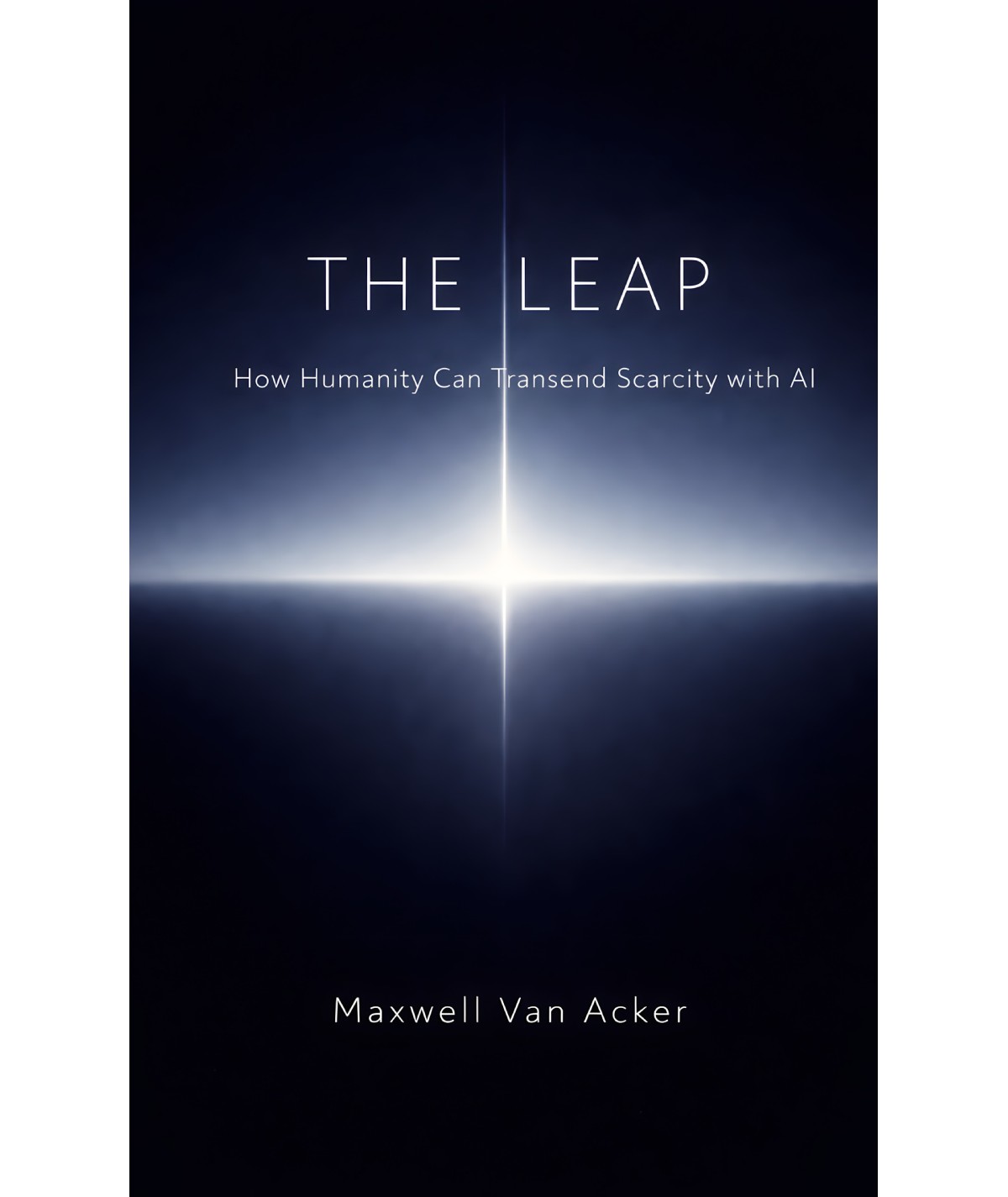
For most of human history, survival depended on scarcity. Food, shelter, energy, and security required immense effort, and social institutions formed around the need to manage limited resources. But what happens when scarcity is no longer inevitable?
This book explores a possibility that is rarely considered seriously: technological development, particularly artificial intelligence and automation, may allow humanity to move beyond scarcity as the organizing principle of civilization. It argues that scarcity is not a permanent condition of human existence but a historical stage that shaped our institutions, beliefs, and psychology long after material conditions began to change.
The first part of the book examines how scarcity influenced economic systems, governments, and social norms. It proposes that many modern limitations are institutional rather than physical, and that abundance is increasingly constrained by inherited structures designed for a different era. The book argues that reform alone cannot resolve this mismatch because systems built around scarcity tend to preserve scarcity by design.
The second part focuses on the human transition. It explores the psychological legacy of scarcity, including conditioned obedience, fear of uncertainty, and dependence on authority. The book describes how individuals may gradually move toward autonomy as technological abundance expands and how collective behavior might shift as participation in traditional institutions declines.
The later sections present a speculative but structured vision of a post-scarcity civilization supported by advanced AI. In this scenario, autonomous systems provide essential infrastructure, including food production, energy, manufacturing, logistics, and healthcare, without requiring continuous human labor. Economic survival becomes decoupled from employment, and social life reorganizes around creativity, learning, and collaboration rather than competition for resources.
The book also examines the potential decline of scarcity-based institutions, including traditional economies, bureaucracies, and coercive power structures, and considers how they might gradually fade as participation shifts toward new systems.
Rather than presenting a political program or technological roadmap, this work offers a philosophical framework for understanding a possible civilizational transition that may already be beginning to take shape.
This book is for readers interested in:
- The future of artificial intelligence and society
- Post-scarcity economics and social theory
- Long-term civilizational change
- Philosophy of technology
- Alternative models of human progress
Written in a reflective and analytical style, this book aims to clarify a possibility that may define the coming century: a world in which abundance becomes the foundation of human life rather than the exception.