Humanity shares a single planet, a finite span of time, and a growing set of interconnected challenges. Yet despite unprecedented technological power, modern civilization often behaves like disconnected parts of a failing machine.
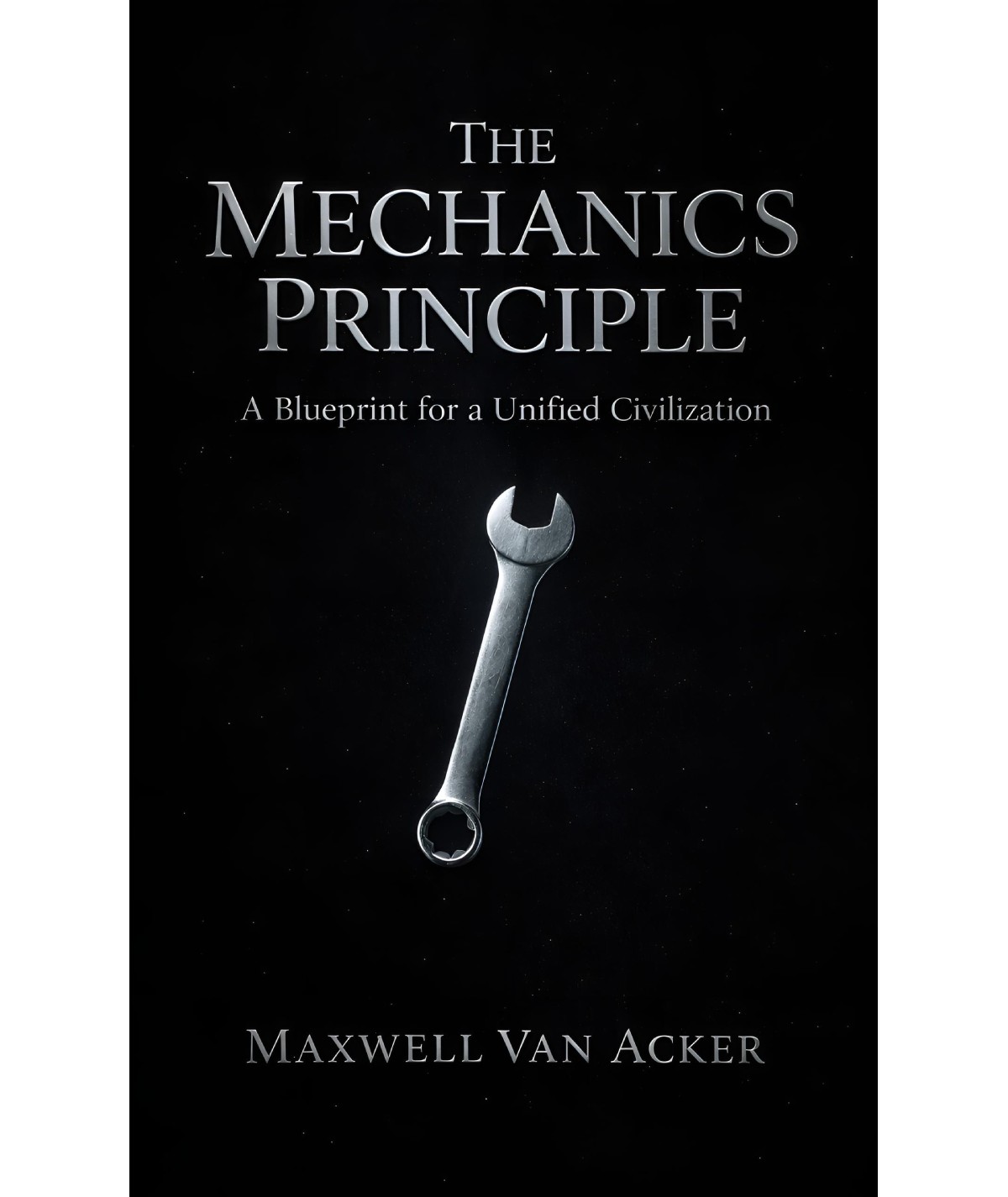
The Mechanics Principle begins with a simple metaphor: two stranded mechanics standing beside a broken car. Each has different tools, different ideas, and different assumptions, but both share the same reality; either they repair the engine together or neither escapes. This image becomes a model for understanding civilization itself: one planet, one system, and limited time.
The book argues that the greatest obstacle to progress is not a lack of intelligence or technology, but fragmentation. Nations compete while ecosystems decline. Corporations duplicate effort while global problems remain unsolved. Ideologies divide attention while practical solutions wait. Across twenty-six chapters, the author examines how competition, tribal psychology, and outdated institutions prevent humanity from coordinating effectively.
Rather than proposing a political ideology, The Mechanics Principle presents a functional philosophy grounded in systems thinking. Civilization is described as an interconnected engine in which energy, computation, education, health, and governance must operate together. The book explores how abundant clean energy, shared computational infrastructure, open knowledge, and artificial intelligence could transform humanity from a fragmented species into a coordinated one.
Major themes include:
- Cooperation as a law of survival rather than a moral preference
- Energy and computation as the true currencies of progress
- Artificial intelligence as a tool for global coordination
- Education and knowledge as universal infrastructure
- Competence as the foundation of ethical action
- Open systems as the basis for resilient societies
- The long-term expansion of intelligence beyond Earth
Throughout the book, technological ideas are connected to philosophical questions about ethics, consciousness, and the future of intelligence. The author argues that compassion and competence must evolve together if civilization is to endure.
The Mechanics Principle is written for readers interested in big-picture thinking about humanity’s future. It will appeal to those who enjoy works that explore civilization-scale questions, technological progress, and long-term ethics. Readers of philosophy of technology, systems theory, and future studies will find a structured and thoughtful perspective on global coordination.
At its core, the book proposes a simple idea: survival requires shared repair before shared belief. Civilization moves forward not when everyone agrees, but when people work together to keep the engine running.