Most people are never directly taught the rules of social communication. They absorb them gradually through observation, imitation, correction, and repetition. For autistic individuals and other analytically minded readers, this creates a problem: important social expectations are enforced constantly, yet rarely explained clearly.
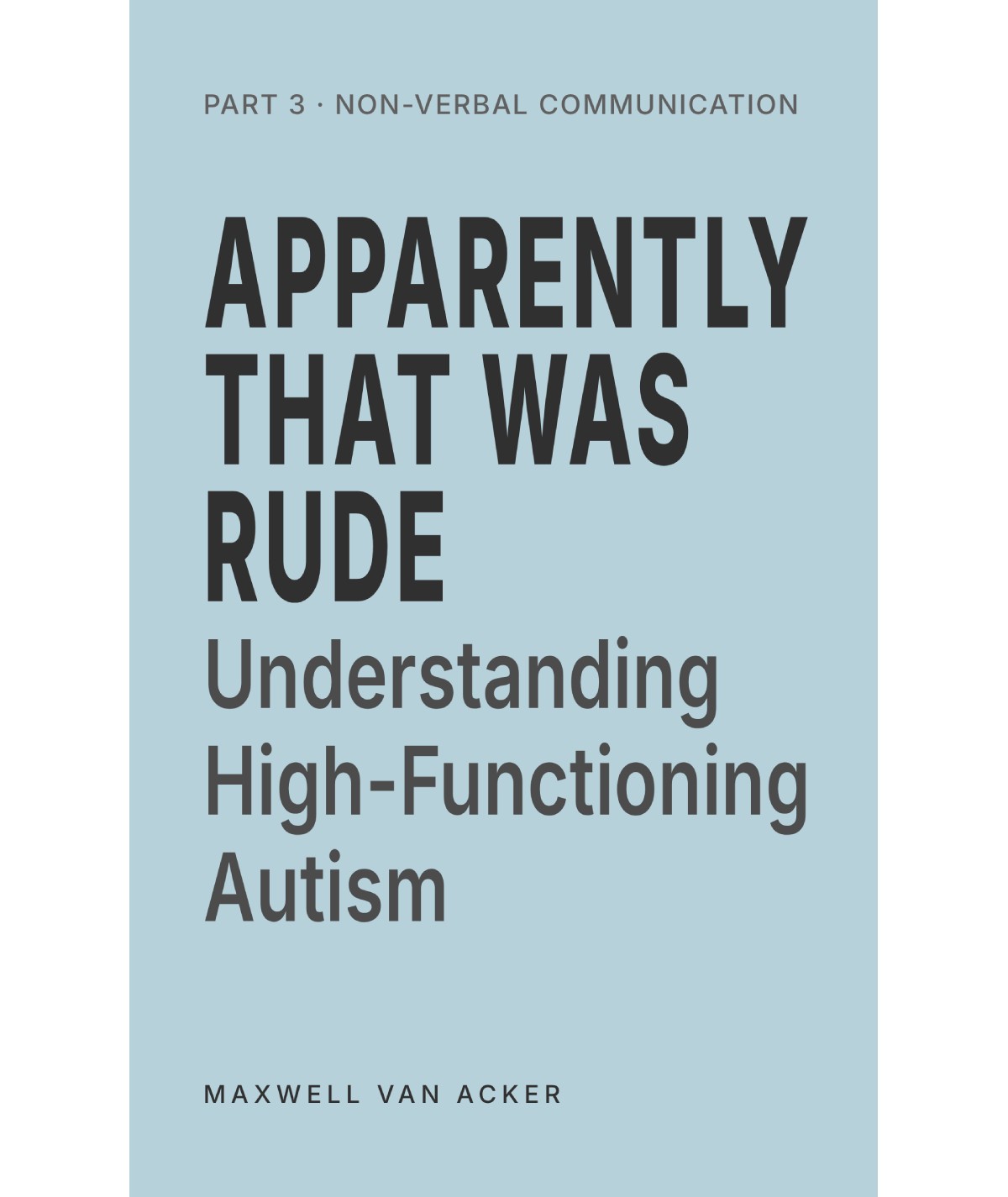
Apparently That Was Rude, Part 3 approaches social interaction from a different perspective. Instead of relying on intuition, it treats communication as a structured coordination system with observable patterns, predictable signals, and consistent behavioral logic.
This volume focuses specifically on non-verbal communication, the layer of interaction that often determines how spoken words are interpreted. Eye contact, posture, facial expression, conversational timing, physical orientation, silence, tension signals, disengagement cues, and emotional regulation are examined in a direct and systematic format.
Each chapter isolates a specific social behavior and explains:
- The function of the behavior
- Why people use it
- What signals typically appear
- How others interpret those signals
- Common autistic failure patterns
- Practical behavioral adjustments
- Situations where the rule does not apply
Rather than presenting social interaction as mysterious or emotionally abstract, the book explains the underlying coordination mechanisms that help groups reduce tension, avoid confrontation, maintain comfort, and regulate status and attention.
Topics include:
- Recognizing aggression and discomfort signals
- Interpreting pauses and silence
- Distinguishing friendliness from flirting
- Detecting forced versus genuine expressions
- Understanding when eye contact signals attention versus challenge
- Recognizing disengagement before conflict develops
- Adjusting posture, gestures, and conversational intensity
- Understanding cultural variation in non-verbal behavior
- Recovering after social mistakes without escalating tension
The writing style is intentionally structured and precise. The goal is not performance, manipulation, or artificial charisma. The focus is functional social comprehension: understanding how interactions are interpreted and how misunderstandings develop.
This book may be especially valuable for:
- Autistic adults seeking clearer explanations of social behavior
- Teenagers entering workplaces or higher education
- Parents of neurodivergent children
- Therapists and autism specialists
- Educators and support staff
- Readers interested in communication systems and behavioral analysis
Unlike many books on social skills, Apparently That Was Rude, Part 3 avoids motivational language, oversimplified positivity, and vague emotional advice. The material is organized as a practical reference system designed for readers who prefer clarity, consistency, and explicit reasoning.
The book does not assume that social difficulty reflects lack of intelligence or lack of effort. Instead, it recognizes that many social systems operate through indirect signaling that is rarely verbalized openly. By making those systems explicit, the book helps readers reduce confusion, avoid unintended conflict, and navigate social environments more confidently and accurately.
For readers who have often been told they were “too intense,” “awkward,” “cold,” or “rude” without understanding why, this book provides a structured framework for interpreting the invisible layer of communication that shapes everyday interaction.